Cult Brand Moments Through Motion

motion
branding
17 November 2025
Every so often, a brand creates a digital moment so compelling that entire communities stop to take notice. Apple’s scroll-based product reveals. Stripe’s fluid gradients. Airbnb’s 3D animated icons. These were strategic brand moments that won over developers, designers, and customers simultaneously.
Many companies assume these effects require budgets they don’t have, but they’re wrong. What these moments actually require is smart prioritization and good planning.
I’ve previously written about motion being relegated to the last 2 sprints of every digital projects, as if motion designers could miraculously revive dead-static designs– they are no Dr. Frankenstein.
Here’s the thing though, you can integrate motion consistently in your brand artifacts as well as in your products, without a Silicon Valley budget.
Several tech companies achieved cult levels of brand awareness thanks to motion and visual effects, winning over entire communities of users and customers, and cementing their brand images as pioneering companies blending technology and lifestyle. Some of the effects and techniques they used are now regarded as milestones of technology-driven digital marketing.
Let’s look at some examples.
Apple’s AirPods Pro Scroll Timeline
For the launch of the AirPods Pro 1st Generation back in October 2019, Apple did something unexpected: they made their product landing page highly interactive by implementing a long, complex scroll-based png sequence of the new Airpods: swift image transitions and changing headings as you scrolled down the page, images blending into each other, almost popping out of the screen and light effects playing along the experience.
To be precise, Apple didn’t invent this technique, but they made it popular by implementing it in a complex and polished experience that still wows anyone to this day. Plus, no one would expect this to be used on a page that had to convert hard. The audacity.
The result? Within days of that launch, thousands of agencies, designers and devs were asked to achieve the same effect for companies and brands of any kind, cementing the scroll-based timeline as a staple of modern web design and Apple’s role as a pioneer in the field of web effects. The experience had entire communities of designers, developers and marketers debate the technique for months to come, winning over many hearts in the process.
Stripe’s Lava Lamp Gradient.
Perhaps a little more niche, the “Lava Lamp Gradient” dates back to 2020 when Stripe underwent a big rebrand and redesign. The animation is quite simple, but plays extremely well with the brand colors and the idea that Stripe’s solutions are fluid and easy to integrate into any system.
The interaction was immediately popular among developers and paved the way for thousands of WebGL shader experimentations in the following years: glowing gradients, moving blobs of color, light/shadow effects, organic transitions between pages etc… This simple effect on Stripe’s homepage inspired a whole generation of developers to start learning webGL and helped form the “creative developer” professional niche.
The company released this experience along with a high quality, scalable design system that still looks modern and compelling 5+ years later, and ultimately earned them a position in the Olympus of well-branded tech companies.
Airbnb’s Skeuomorphic Icons.
Earlier this year, two events shook and sparked controversy in the design community: Airbnb’s animated icons and Apple’s liquid glass.
This time though it was Airbnb to take home the gold medal for design pioneer. Not only did the company revive skeuomorphism and early 2000s design trends, but they did so with extraordinary engineering effort. In attempt to bring “fun” to their web and mobile apps, Airbnb created its own proprietary 3D animation engine and decoder called lava – which allows them to create ultra-lightweight, complex 3D animated icons that can be easily controlled by developers and respond to user events such as clicks, hovers and state changes. An insane amount of effort for a set of icons. But exactly this detail created an unprecedented brand moment.
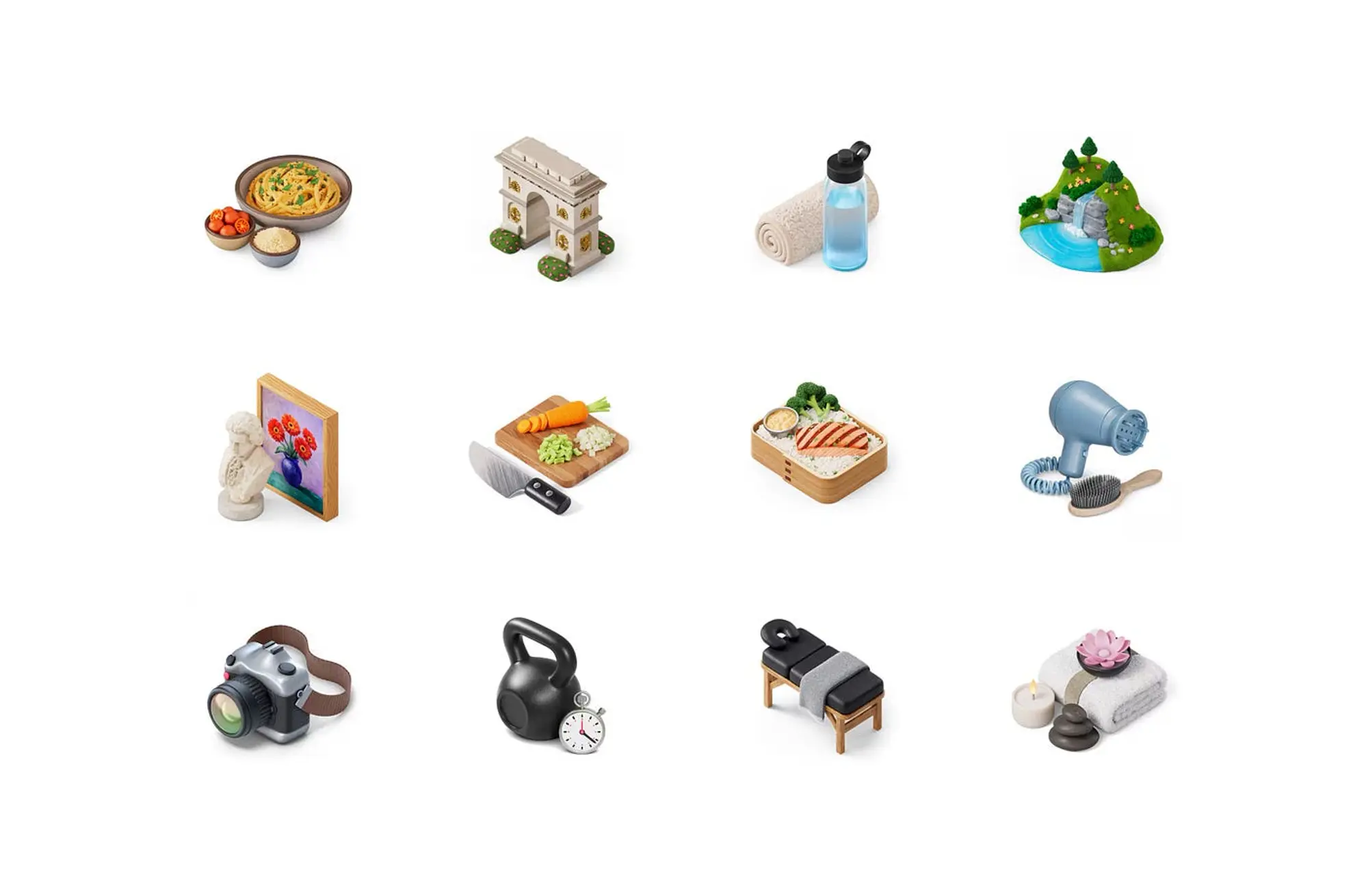
Image taken from an article by Caden Burleson on Medium. Here is also a launch video by CEO Brian Chesky
It’s already clear from these few examples that motion effects and interactions can elevate a brand’s status, not just by merely increasing traffic but rather by winning over entirely new customer bases and earning a cult following that will benefit the company for years.
Now, you may think you can’t achieve any of this because you lack the budget of Apple, Stripe or Airbnb. But you would be missing the point. There is already a great difference between what Apple or Airbnb are willing to invest in these efforts and what Stripe did: I chose Stripe’s example because it was its simplicity and unexpected nature – coming from a payment services provider – that made it cult. They likely didn’t spend much to create this experience, but it is still featured on the homepage 5 years later, and everybody calls it “gradients as seen on Stripe’s homepage”.
This distinction proves that it is less about budget and more about prioritization and planning. To clarify what I mean, I’ve put together a few rules that most brands could easily follow to achieve a similar status:
-
First, you need to be receptive. Inform yourself about design trends, motion and what is possible on the web and apps. Develop a sensibility for it. It still amazes me how many communities and creative ecosystems are active in this field. If you think your customers won’t like a certain effect just because you don’t, think again.
-
Get your team straight. Here too it’s less about individual talent and more about collaboration. Hire designers who understand development and developers who understand design. Try not to compartmentalize. Your Art Director should be debating their early concepts with designers and developers in the room. Get a Creative Director who makes sure designers operate within the confines of reality, and developers build the architecture of your product allowing for motion and interactivity.
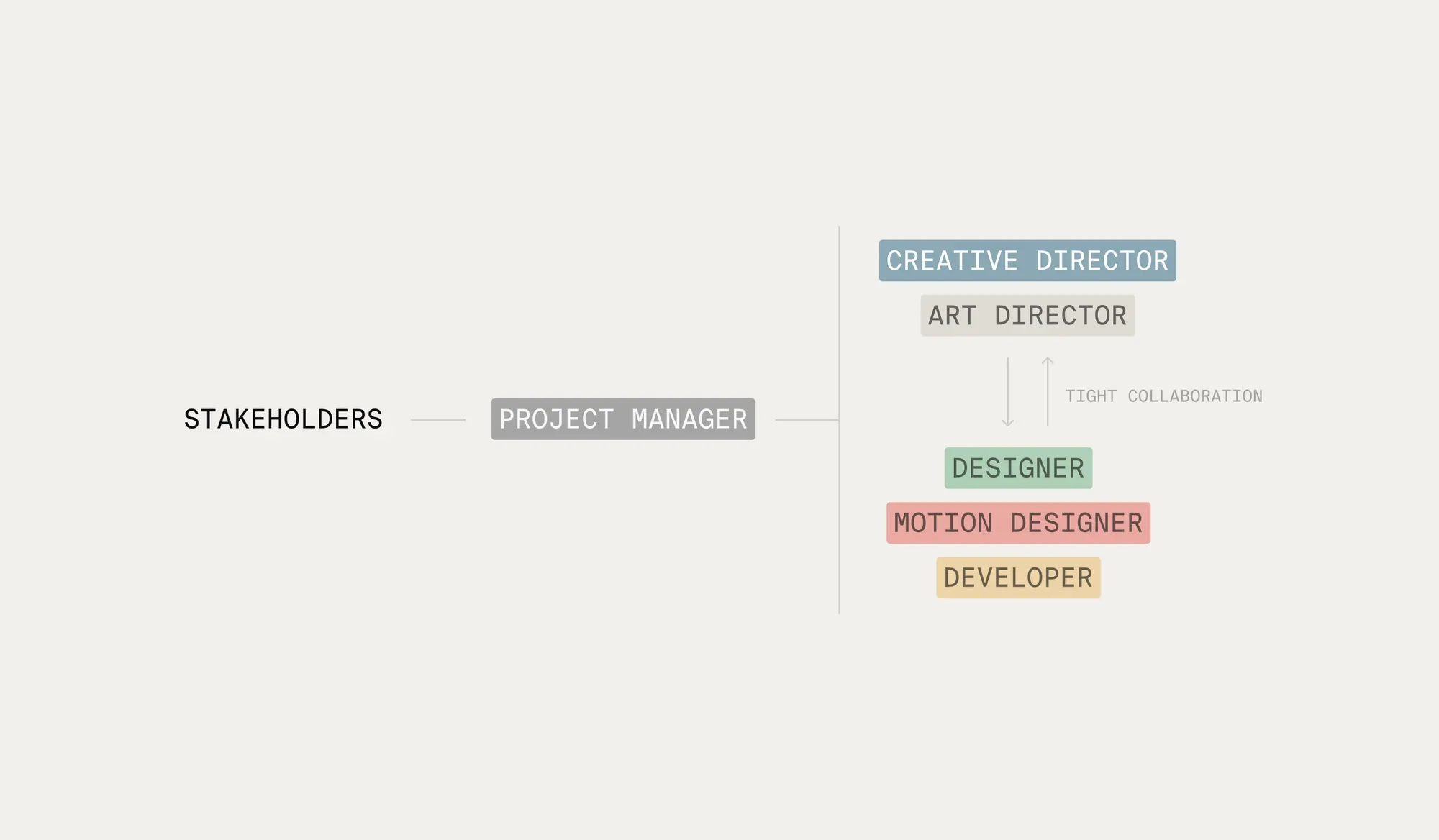
Approximate visualization of an ideal project team. Hierarchy is only functional to the collaboration within the team.
-
Once the team is set, make sure you dedicate TIME for it. This doesn’t mean you need to leave your creative team unmonitored for months – make a solid plan. But in that plan, make sure you’re allocating reasonable time for motion research and effects. This should happen parallel to the design phase, prototyping features and interactions early on in the process. It will certainly expand your design timeline, but that’s infinitely less costly than solving bugs in the development phase.
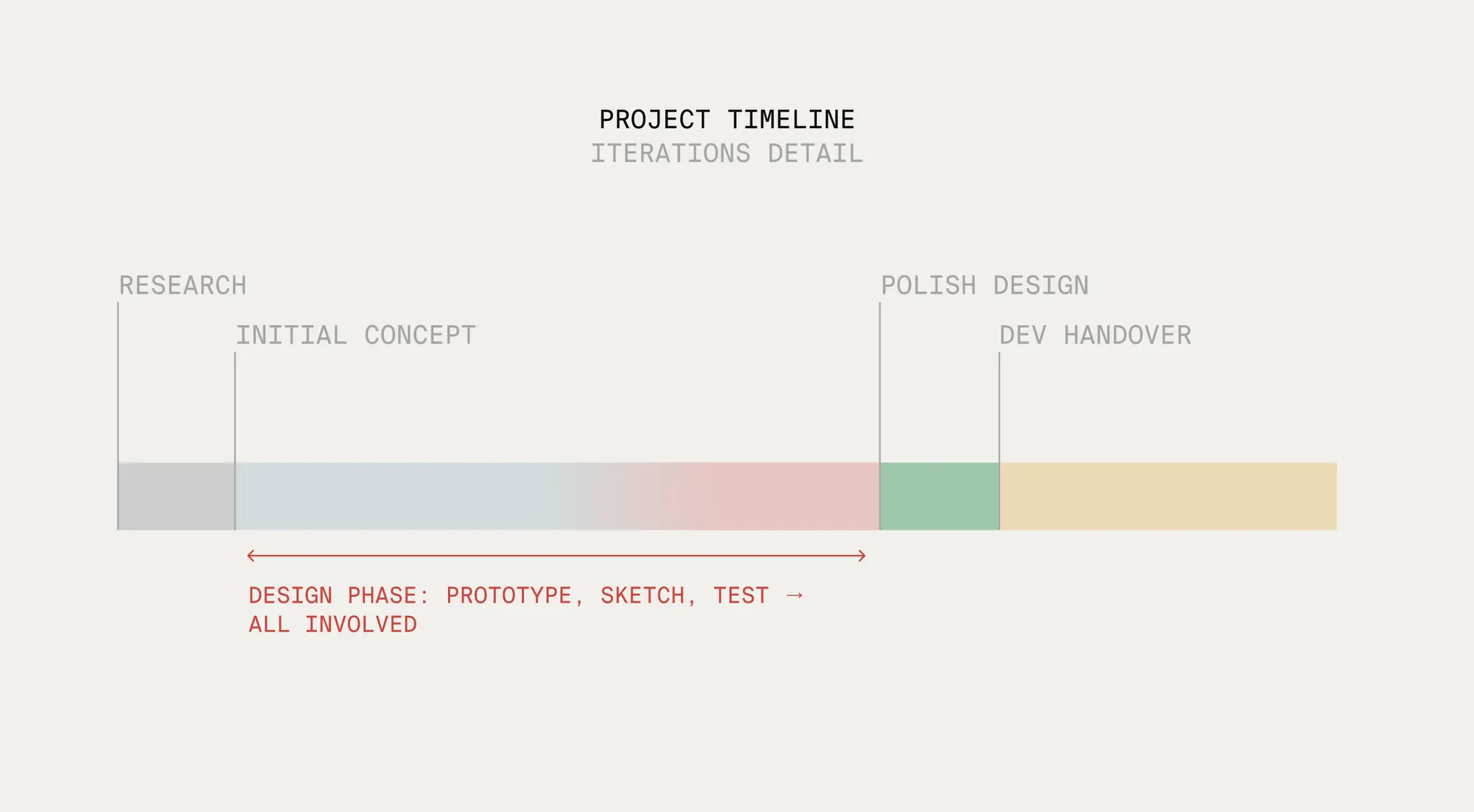
Visualization of the “iteration” phase. Stretching the design phase will help keep the final design (polish) and development phases much shorter and with fewer hiccups.
-
Do not rush to develop. Like famous architect Frank Gehry, you should spend as much time as possible playing around with sketches, design ideas, early iterations using whatever means you have. Developers should absolutely be part of this process: testing early ideas, flagging pitfalls and potential bugs. This will ensure your development phase will be smoother, shorter and thus cheaper.
If you follow these rules and you get your priorities straight, you will be able to implement amazing effects into your digital products for a reasonable investment, and who knows, maybe even reach cult status.